
5. Towards a Sustainable Chemical Traceability Framework
Section outline
-
The analysis of chemical traceability in the textile and carpet sectors reveals a complex landscape where regulatory demands, market pressures, and technological capabilities intersect. Through examining the current state, several key findings and insights emerge that articulate the path forward for implementing effective chemical traceability systems.
The interconnected nature of chemical traceability challenges becomes apparent when considering the interdependencies between various stakeholders. Supply chain actors, from raw and recycled material suppliers to end-product manufacturers and waste operators, must coordinate their efforts while navigating different regulatory frameworks and market expectations. This interdependence extends beyond individual companies to cover entire industrial ecosystems, where the actions of one participant can significantly impact others' ability to implement effective chemical traceability systems.
When framing the status quo, we observe a spectrum of approaches ranging from basic compliance to innovative value creation. Many organisations, particularly SMEs, remain focused on meeting minimum regulatory requirements, while industry leaders are leveraging traceability as a competitive advantage, including developing various parallel transparency and traceability standards, potentially with different priority chemicals and disclosure thresholds. This disparity highlights the need for a comprehensive globally harmonised transparency and traceability system that can help all industry participants transition toward more advanced chemical traceability systems.
Creating a level playing field emerges as a critical concern for successful implementation. The current landscape shows significant disparities in resources, technical capabilities, and market access between large corporations and SMEs. These differences risk creating a two-tier system where only well- resourced organisations can fully implement traceability measures. Addressing this imbalance requires targeted support mechanisms, including accessible training programmes and technical assistance, particularly for SMEs.
The resilience of chemical traceability systems proves essential for long-term success. Organisations must develop capabilities to maintain traceability practices despite supply chain disruptions, changing regulatory requirements, and evolving market demands. This resilience depends on robust technical systems and also on organisational capacity building and strong collaborative networks.
Sustainability considerations are integrated into every aspect of chemical traceability implementation. Beyond environmental protection, sustainable approaches must account for economic viability and social responsibility. This triple bottom-line perspective helps ensure that chemical traceability systems contribute to broader sustainability goals while remaining practically achievable for the industry and value chain.
The key findings from our analysis converge around five fundamental dimensions that shape successful traceability implementation. These dimensions, synthesised in Figure 7, involve systemic approach, capacity building, technology adoption, policy frameworks, and market dynamics.
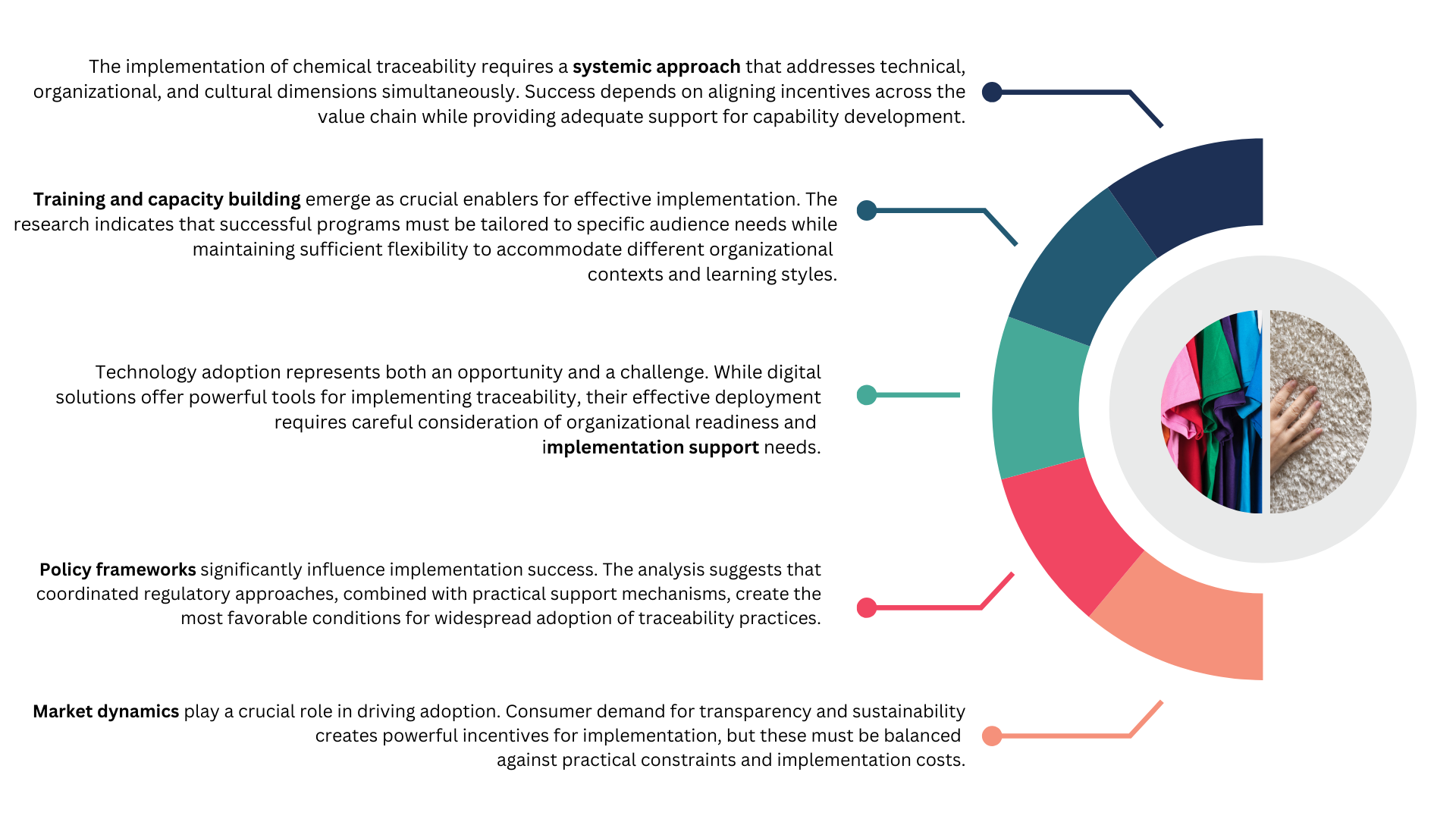
These findings emphasise the importance of developing a comprehensive cross-sectoral globally harmonised system that can help organisations navigate the complexities of chemical transparency and traceability implementation. The path forward requires sustained commitment to addressing both structural and operational challenges while maintaining focus on long-term sustainability goals.
As the textile and carpet industries continue their transformation toward greater transparency and sustainability, chemical traceability will play an increasingly central role. Achievement in this transformation depends on creating systems that are technically robust, economically viable, and socially responsible. By addressing the challenges and opportunities identified in this analysis, stakeholders can work together to build more sustainable and transparent value chains that benefit all participants while protecting human health and the environment.
The journey toward comprehensive chemical traceability represents a significant challenge, but also an opportunity for meaningful industry transformation. Through coordinated action, sustained commitment, and appropriate support structures, the textile and carpet sectors can achieve the level of transparency and sustainability demanded by evolving markets and regulatory frameworks.