
-
ECHT Knowledge Platform
Shared knowledge space on the traceability of chemicals in textiles
-
Project highlights
-
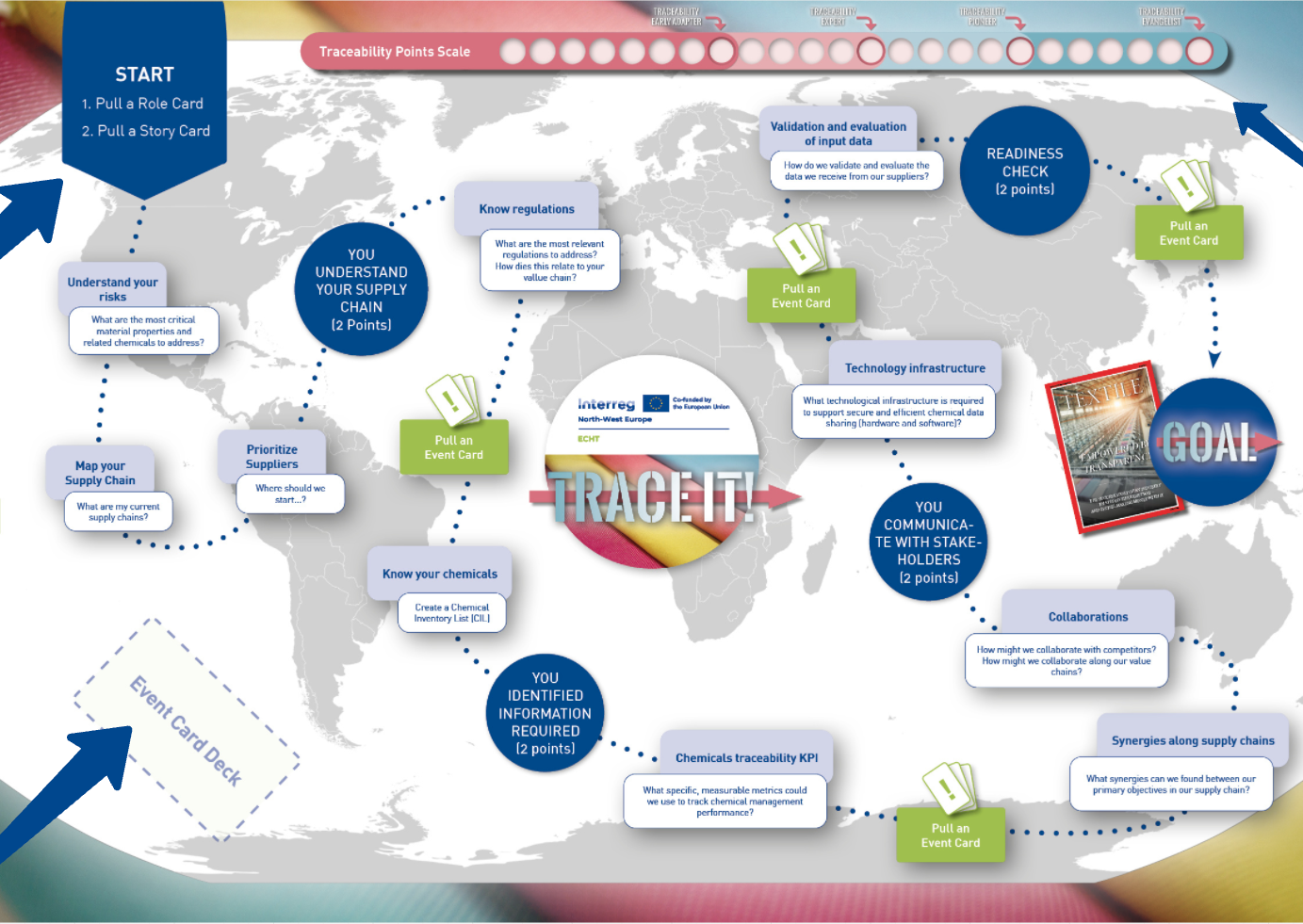
Trace IT Game
"Trace-It" is a simulation game that allows players to step into the shoes of departments of organisations aiming to implement chemicals traceability.
-
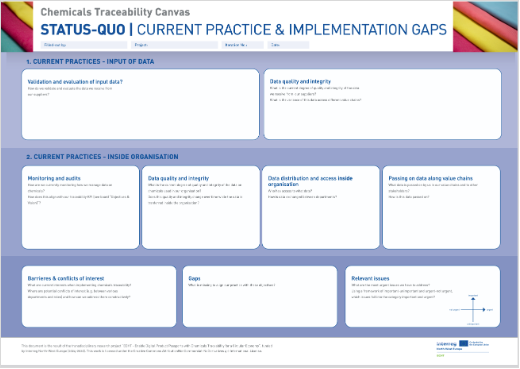
Chemicals Traceability Canvas
Implementing chemical traceability along global value chains is a complex and iterative process that requires a holistic understanding of current processes and goals in one’s organisation and the supply chain.
-
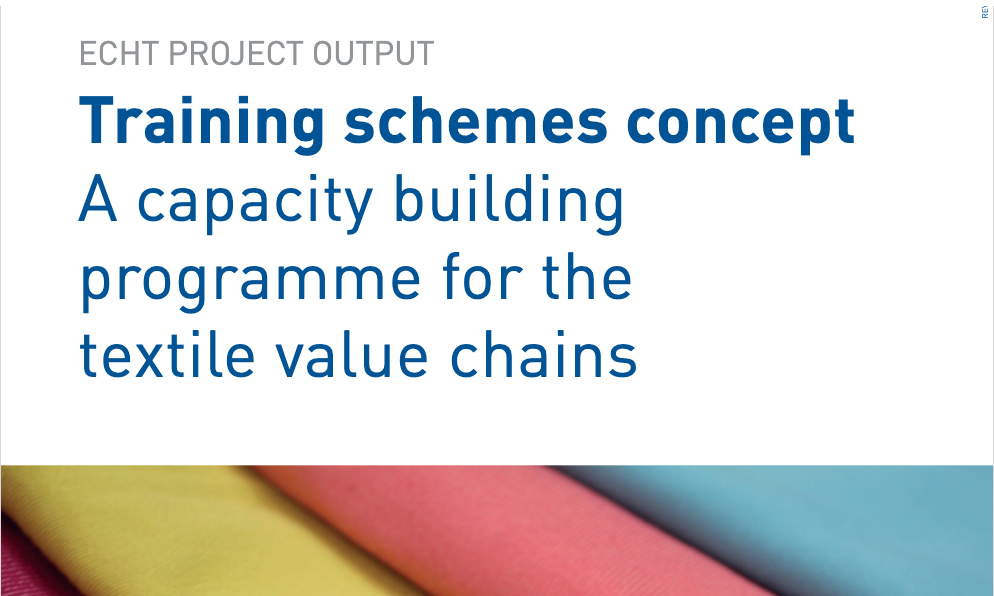
Training scheme concept
This training schemes concepts outlines the overall structure and content of a capacity building workshop series targeted at SMEs in the textile apparel value chains. It makes use of the tools and approaches developed in the ECHT project.
-
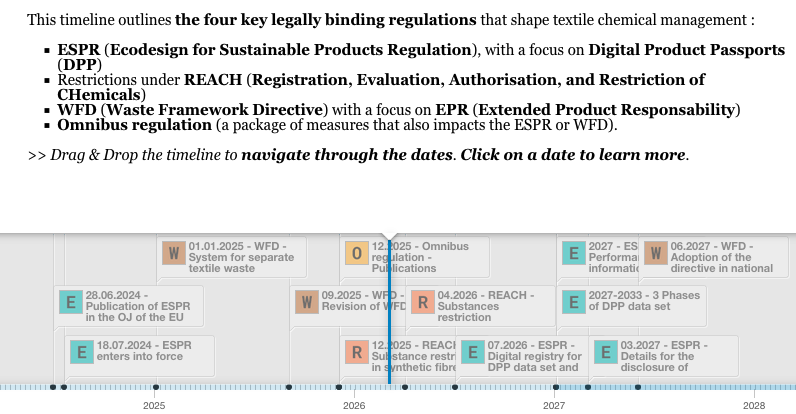
Textile Traceability Timeline
Explore a decade of regulations for chemical traceability requirements for textiles.
-
Stepwise approach to identify substances of concern (SoC) in products
Browse this resource to find a stepwise approach of the methodology described in the document ‘Method for the identification and tracking of SoC in products and for the preparation of restriction measures on the use of substances in products’ by the Joint Research Centre.
-
-
Choose a topic to start your learning journey
-

Glossary of technical terms
This glossary includes all technical terms used in the courses and documents on this platform.
-
Funded under the initiative
The ECHT Knowledge Platform is co-funded by the Interreg North-West Europe programme and by Le Ministère de l’Environnement, du Climat et de la Biodiversité de Luxembourg.


ECHT Knowledge Platform
ECHT Knowledge Platform
Shared knowledge space on the traceability of chemicals in textiles
 Legislation (regulations & directives)
 Chemicals in Textile Industry
 Achieving Traceability
 ECHT Vision and Strategy